
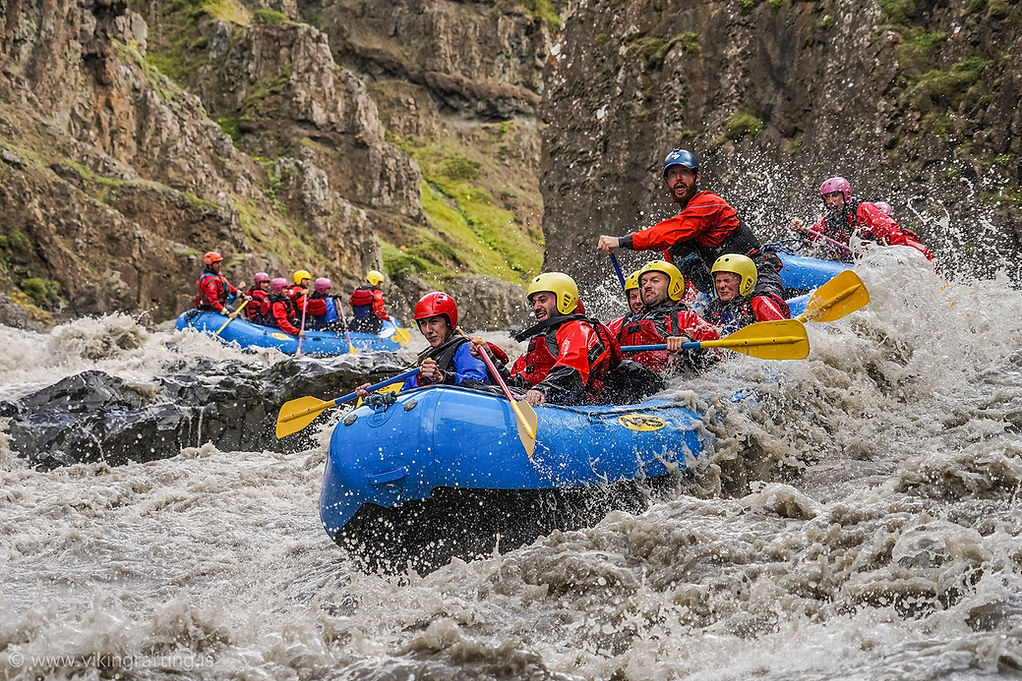
DRYSUIT vs WETSUIT
FOR RAFTING IN ICELAND
Rafting in Iceland usually raises the same question for first-time visitors: will I be freezing in the river?
Iceland’s glacial rivers are cold, and rafting operators provide protective suits to keep participants comfortable.
Depending on the company and the river, you’ll usually wear either a drysuit or a wetsuit.
Both systems are used in cold-water sports, but they work very differently, and for rafting in Iceland, the difference matters more than most people expect.
What a Drysuit is
A drysuit is designed to keep water completely out.
The suit seals tightly at the neck, wrists, and feet, preventing river water from entering. Underneath, you wear insulating layers such as thermal clothing or fleece.
It’s important to understand that the suit itself doesn’t provide the warmth: the insulation comes from the layers you wear underneath.
Because the water stays outside the suit, you remain mostly dry even when waves splash over the raft or if you briefly end up in the river.
For rafting in Iceland, this makes a big difference. Glacial rivers are cold, but the air temperature and wind on the river can make you feel even colder, especially after getting wet.
With a drysuit:
-
You stay dry most of the time
-
Wind doesn’t chill your body through wet clothing
-
You remain comfortable even after falling into the river
For this reason, drysuits are preferred on many rafting trips in Iceland, including both family-friendly trips and more adventurous runs.

What a wetsuit is
A wetsuit works in a different way.
Instead of keeping water out completely, wetsuits allow a thin layer of water to enter between the suit and your skin. Your body warms this water layer, which helps insulate you from the colder river around it.
Wetsuits are very common in sports where people are constantly immersed in water, such as surfing or diving.
However, rafting is different.
Most of the time, you’re sitting in the raft, exposed to wind and air temperatures. If you get soaked in a wetsuit and then spend time sitting in the raft on a windy day, that wet layer can start to feel quite cold.
This is why wetsuits are generally less comfortable for rafting in Iceland, especially when the weather is cool or windy.
Why drysuits are often preferred for rafting in Iceland
For rafting guides and operators, the goal is not just to keep people safe in cold water; it’s to keep them comfortable during the entire trip.
That includes:
-
Sitting in the raft
-
Being splashed by waves
-
Wind exposure on the river
-
Occasional swims in the rapids
A drysuit protects you from both the cold water and the cold air, which is why some operators prefer them.
If someone falls into the river during a more active rafting trip, a drysuit also makes the recovery more comfortable. Once back in the raft, the person is still mostly dry and protected from the wind.
With a wetsuit, you come out of the water completely wet, and on a windy day, that can feel quite cold while sitting in the raft.
Not many rafting operators on Iceland’s glacial rivers use drysuits.
Viking Rafting provides them on their tours to keep participants comfortable in all their trips.
You can use code NIIICE when booking.

Should you be worried about the cold?
Not really.
Professional rafting companies in Iceland choose their equipment carefully based on river conditions and safety standards.
Whether using drysuits or wetsuits, guides design the system to keep participants comfortable in cold glacial water.
But if you’re concerned about comfort, especially on windy days, drysuits tend to provide a warmer and more comfortable experience for most people.

What to wear under a drysuit
Because a drysuit itself doesn’t provide insulation, what you wear underneath is what keeps you warm during the trip.
The goal is to wear light insulating layers that stay warm even if a little moisture gets inside the suit.
Most rafting operators in Iceland recommend something like:
-
A thermal base layer (merino wool or synthetic)
-
A mid layer such as fleece or light thermal clothing
-
Warm socks (often wool)
Avoid wearing cotton if possible. Cotton holds moisture and can make you feel colder if it becomes damp.
On warmer summer days, a base layer and light fleece are usually enough. On cooler or windy days, adding an extra insulating layer can make the experience much more comfortable.
Rafting companies will also provide additional gear such as helmets, buoyancy aids, river shoes, and sometimes gloves, so you don’t need to bring specialized equipment beyond your base layers.
Our take
In theory, both wetsuits and drysuits can work in cold water environments.
But for rafting in Iceland, where people spend most of the trip sitting in a raft exposed to wind and weather, drysuits are generally the more comfortable option.
They keep you dry, protect you from wind chill, and make the experience much more enjoyable if you end up in the river.
With the right equipment and experienced guides, rafting in Iceland becomes less about worrying about the cold and more about enjoying the river and the surrounding landscape.
If you're still deciding whether rafting is worth adding to your itinerary, our guide to white water rafting in Iceland explains what the experience is actually like.